
Borobudur Temple is one of the most remarkable cultural landmarks in Indonesia and one of the most famous Buddhist monuments in the world. Located in Magelang, Central Java, this ancient temple attracts visitors from around the globe with its magnificent architecture, intricate stone carvings, and fascinating history.
Built centuries ago, Borobudur is more than just a historical site. Its unique design, religious symbolism, and breathtaking surroundings make it an unforgettable destination for anyone visiting Central Java.
But what exactly makes Borobudur so special? Who built it, what is it known for, and is it actually one of the Seven Wonders of the World?
What’s So Special About Borobudur?
There are many reasons why Borobudur Temple is considered one of the world’s most extraordinary historical monuments.
One of the most impressive features is its enormous structure. Borobudur was constructed from thousands of volcanic andesite stones without modern construction technology. The temple consists of multiple levels arranged in the shape of a giant mandala, representing the Buddhist path toward enlightenment.
The monument is decorated with hundreds of stupas and thousands of relief panels. These reliefs tell stories about Buddhist teachings, everyday life, nature, and the society that existed when the temple was built.
Another special aspect of Borobudur is its location. The temple sits in a valley surrounded by mountains and hills, including Mount Merapi, Mount Merbabu, the Menoreh Hills, and other volcanic landscapes. On clear mornings, the combination of the ancient temple and surrounding scenery creates one of the most memorable views in Central Java.
Borobudur is also recognized as a UNESCO World Heritage Site, highlighting its outstanding cultural and historical significance.
Is Borobudur Part of the 7 Wonders of the World?
This is one of the most common questions about Borobudur.
Borobudur is not officially one of the New Seven Wonders of the World.
The New Seven Wonders of the World were announced in 2007 through a global campaign organized by the New7Wonders Foundation. The final list includes the Great Wall of China, Petra, Chichén Itzá, Machu Picchu, the Colosseum, the Taj Mahal, and Christ the Redeemer.
However, Borobudur is sometimes described as one of the world’s great wonders because of its extraordinary architecture, age, scale, and cultural importance.
More importantly, Borobudur has been recognized by UNESCO as a World Heritage Site since 1991. This recognition reflects its exceptional universal value and its importance to world cultural heritage.
So, while Borobudur isn’t officially part of the modern Seven Wonders of the World, its historical and architectural significance is certainly comparable to many of the world’s most famous monuments.
Who Built Borobudur Temple?
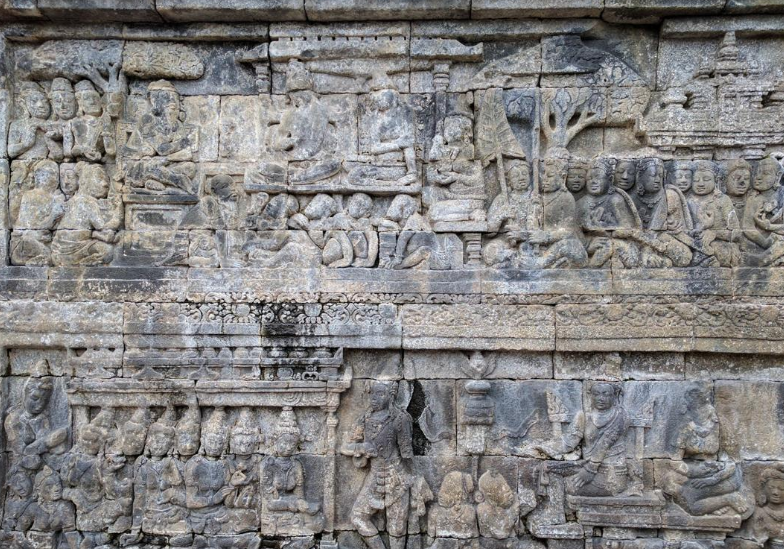
Borobudur Temple was built during the Shailendra Dynasty, which ruled parts of Central Java during the 8th and 9th centuries.
Historians generally date the construction of Borobudur to around the 8th and 9th centuries, although the exact identity of the individual architect or builder is not known.
The monument is believed to have been commissioned by rulers of the Shailendra dynasty as a major Buddhist religious monument.
Building Borobudur must have been an enormous undertaking. The temple was constructed using massive quantities of volcanic stone, carefully arranged to create its distinctive terraces, stupas, galleries, and reliefs.
The monument also demonstrates the advanced knowledge of architecture, engineering, art, and religious philosophy possessed by the people of ancient Java.
What Is Borobudur Temple Known For?
Borobudur is best known for its unique Buddhist architecture, magnificent stupas, and extensive stone reliefs.
The temple has three main symbolic levels that correspond to Buddhist cosmology:
1. Kamadhatu
The lowest level represents Kamadhatu, the world of desires. The reliefs at this level illustrate human life and the consequences of actions.
2. Rupadhatu
The middle section represents Rupadhatu, the world of forms. Visitors can walk through galleries surrounded by detailed relief panels depicting Buddhist teachings and stories.
3. Arupadhatu
The upper terraces represent Arupadhatu, the formless world. This section is characterized by circular terraces and numerous perforated stupas containing Buddha statues.
At the very top is the central stupa, symbolizing the highest stage of spiritual achievement.
This design makes Borobudur more than an architectural masterpiece. The entire monument can be understood as a symbolic journey from the ordinary world toward enlightenment.
How Many Stupas Are There at Borobudur?
One of the most recognizable features of Borobudur is its collection of bell-shaped stupas.
The monument contains 72 perforated stupas arranged across the three circular terraces at the upper levels. Inside many of these stupas are seated Buddha statues.
The combination of the stupas, Buddha figures, stone terraces, and surrounding landscape creates the iconic appearance that makes Borobudur instantly recognizable.
Why Should You Visit Borobudur?
Visiting Borobudur offers more than the opportunity to see an ancient temple.
It is a chance to experience one of Indonesia’s most important cultural landmarks, admire centuries-old stone craftsmanship, and learn about the Buddhist philosophy represented throughout the monument.
The surrounding Central Java landscape also makes the experience even more special. For photographers and travelers, Borobudur offers plenty of opportunities to capture architecture, landscapes, cultural moments, and unforgettable memories.
For the best experience, many visitors choose to explore Borobudur in the morning when the atmosphere is cooler and the surrounding landscape can be especially beautiful.
Borobudur: A Cultural Treasure of Indonesia
Borobudur Temple represents an extraordinary combination of history, religion, architecture, art, and nature.
Although it is not officially one of the New Seven Wonders of the World, Borobudur remains one of the world’s most significant Buddhist monuments and a remarkable symbol of Indonesia’s cultural heritage.
From its ancient stone reliefs and 72 stupas to its symbolic journey toward enlightenment, every part of Borobudur tells a story.
For anyone traveling through Central Java, a visit to Borobudur is not simply a trip to an ancient temple. It is an opportunity to step closer to the history and culture that shaped one of Indonesia’s most remarkable landmarks.
Frequently Asked Questions About Borobudur
What’s so special about Borobudur?
Borobudur is one of the world’s largest Buddhist monuments, famous for its unique architecture, thousands of stone reliefs, 72 perforated stupas, and religious symbolism.
Is Borobudur part of the 7 Wonders of the World?
No. Borobudur is not officially one of the New Seven Wonders of the World. However, it is a UNESCO World Heritage Site and is widely regarded as one of the world’s great cultural monuments.
Who built Borobudur Temple?
Borobudur was constructed during the Shailendra Dynasty in Central Java, around the 8th and 9th centuries. The exact individual architect is unknown.
What is Borobudur Temple known for?
Borobudur is known for its massive Buddhist architecture, intricate stone reliefs, 72 perforated stupas, Buddha statues, and its symbolic representation of the Buddhist path toward enlightenment.