
Selogriyo Temple Magelang: History, Location, Architecture, and Attractions
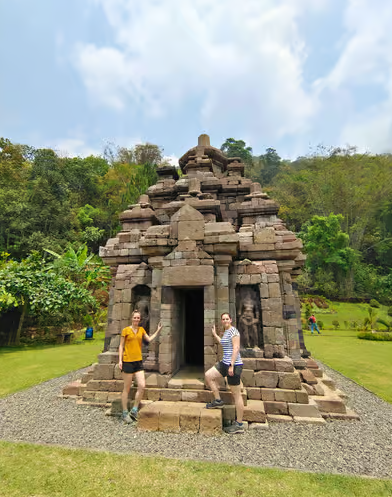
Selogriyo Temple is one of the historical Hindu temples located in Magelang Regency, Central Java, Indonesia. Unlike larger temples such as Borobudur and Prambanan, Selogriyo Temple is relatively small and stands alone in a hilly area on the eastern slopes of Mount Sumbing.
Its location among hills and rice fields makes Selogriyo Temple interesting not only from a historical perspective but also as a destination offering cool weather, beautiful scenery, and a peaceful rural atmosphere.
The temple is believed to date back to the Ancient Mataram period and features architectural characteristics associated with Hindu temples in Central Java.
Location of Selogriyo Temple
Selogriyo Temple is located in Campurejo Hamlet, Kembangkuning Village, Windusari District, Magelang Regency, Central Java. The temple stands on the eastern slope of Mount Sumbing and is surrounded by hills, including Condong Hill and Giyanti Hill.
Because of its location in a hilly area, the journey to Selogriyo Temple is part of the experience itself. Visitors pass through rural roads, agricultural areas, and rice fields before reaching the temple.
This setting gives Selogriyo Temple a different atmosphere from historical temples located in urban or more densely populated areas.
History of Selogriyo Temple
Selogriyo Temple is believed to have been built during the Ancient Mataram period, around the 8th to 9th centuries AD. It is a Hindu archaeological site that reflects the development of religious architecture in ancient Java.
The temple was discovered in 1835 by Hartmann, who at the time served as the Resident of Magelang during the Dutch colonial period. When it was discovered, the temple was no longer completely intact, leading to restoration and reconstruction efforts.
One of the most significant events in the temple’s modern history occurred in December 1998. A landslide on the hill where the temple stood caused severe damage to the structure. Reconstruction was subsequently carried out and completed in 2005.
Architecture of Selogriyo Temple
Selogriyo Temple has a relatively simple design compared with some of the larger temples in Central Java. It is a single temple and does not have accompanying temples or smaller satellite structures around it.
The temple faces east. Several niches can be found on its walls, containing statues associated with Hindu religious traditions.
Some of the statues associated with the temple include:
- Durga Mahisasuramardini on the northern side.
- Ganesha on the western side.
- Agastya on the southern side.
- Nandiswara and Mahakala near the entrance on the eastern side.
These statues provide important clues about the temple’s Hindu religious background and architectural characteristics.
One of the distinctive features of Selogriyo Temple is its pinnacle, known as an amalaka, which has a shape resembling the fruit of the keben tree.
Selogriyo Temple and Its Natural Surroundings
The appeal of Selogriyo Temple goes beyond its historical structure. Its location on the slopes of Mount Sumbing gives the site a unique natural atmosphere.
Along the route to the temple, visitors can enjoy views of hills, rice fields, and traditional rural landscapes. Being relatively far from busy urban areas also gives the temple a peaceful and relaxing atmosphere.
Because the temple is located in a hilly area, the journey also provides an opportunity for visitors to walk while enjoying the surrounding scenery.
The combination of historical heritage and rural landscapes makes Selogriyo Temple a unique historical tourism destination in Magelang.
How to Get to Selogriyo Temple
One common route to Selogriyo Temple is through the Magelang–Bandongan area. From Bandongan Market, visitors can continue toward Windusari District and follow the signs leading to the temple.
After entering the surrounding residential area, the journey continues along narrower roads through the hills. Visitors should pay attention to road conditions, particularly when traveling by private vehicle.
Since the temple is located in a hilly area and relatively far from the main road, it is recommended to prepare your vehicle properly and make sure you are physically prepared for the journey.
What Makes Selogriyo Temple Interesting?
There are several reasons why Selogriyo Temple is worth visiting, especially for travelers interested in history, culture, and nature.
1. A Temple Surrounded by Hills
Selogriyo Temple is located in a hilly environment rather than in the middle of a city. The surrounding landscape becomes an important part of the overall travel experience.
2. Ancient Hindu Javanese Architecture
The temple’s niches, statues, and architectural design reflect the characteristics of ancient Hindu architecture in Central Java. Statues of Durga, Ganesha, Agastya, Nandiswara, and Mahakala are also important elements of its historical significance.
3. A Single Temple Structure
Unlike several temple complexes that consist of multiple buildings, Selogriyo Temple is a single temple without surrounding satellite temples.
4. Beautiful Natural Scenery
The location of Selogriyo Temple offers views of hills, rice fields, and traditional rural landscapes, creating a peaceful atmosphere for visitors.
5. A Combination of History and Nature
Visiting Selogriyo Temple is not simply about seeing an ancient building. The journey itself offers an opportunity to experience the natural landscape and rural atmosphere of Magelang.
Tips for Visiting Selogriyo Temple
If you are planning to visit Selogriyo Temple, consider the following tips:
- Wear comfortable clothing and suitable footwear.
- Make sure your vehicle is in good condition, as the route includes hilly roads.
- Bring enough drinking water.
- Check the weather conditions before traveling.
- Keep the temple area clean.
- Do not climb on or touch historical structures and statues that are part of the cultural heritage site.
- Respect the local environment and surrounding communities.
Selogriyo Temple as a Historical Tourism Destination in Magelang
Selogriyo Temple is one of the many historical sites that demonstrate the rich cultural heritage of Magelang. The area’s historical significance extends beyond the more famous temples commonly visited by tourists.
Although relatively small, Selogriyo Temple offers a unique experience because of its location on the slopes of Mount Sumbing and its surrounding natural landscape.
For travelers who want to explore ancient Javanese heritage while enjoying the peaceful atmosphere of the countryside, Selogriyo Temple can be an interesting destination to include in a Magelang travel itinerary.
Conclusion
Selogriyo Temple is an ancient Hindu temple from the Ancient Mataram period, located on the eastern slopes of Mount Sumbing in Magelang Regency, Central Java. The temple features distinctive Central Javanese architecture, several statue niches, an east-facing entrance, and a single-structure design without surrounding satellite temples.
Beyond its historical significance, Selogriyo Temple’s location among hills and rice fields gives it a strong natural appeal. The journey to the temple, surrounding farmland, and peaceful rural atmosphere are all part of the experience.
With its combination of history, architecture, culture, and natural beauty, Selogriyo Temple is an interesting destination for travelers exploring Magelang and the historical heritage of Central Java.